
Resources
Be informed.
Island Prostate Centre (IPC) helps Vancouver Island men and their families stay informed about prostate cancer concerns, issues and topics. IPC has a small resource library including books, pamphlets and teaching tools for patients, caregivers and supporters, all free of charge. If you are unable to visit us in-person, some resources are also available online.
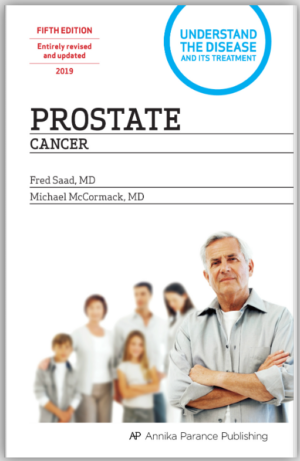 In Canada, one man in eight risks developing prostate cancer. It is the most frequently diagnosed cancer in men. While most commonly diagnosed after age 60, prostate cancer can also occur in men in their forties and fifties. Like other forms of cancer, this disease affects not only the patient but also his spouse and family. At the time of diagnosis, there are many questions that need to be answered. This book provides a simple, concise, practical guide to help patients understand prostate cancer.
 Have you recently been diagnosed with prostate cancer? We understand that this may be a stressful time for you and your family.
This booklet provides answers to common prostate cancer questions. Explains treatment for prostate cancer that is contained within the prostate (localized prostate cancer) or located just outside the prostate (locally advanced prostate cancer).
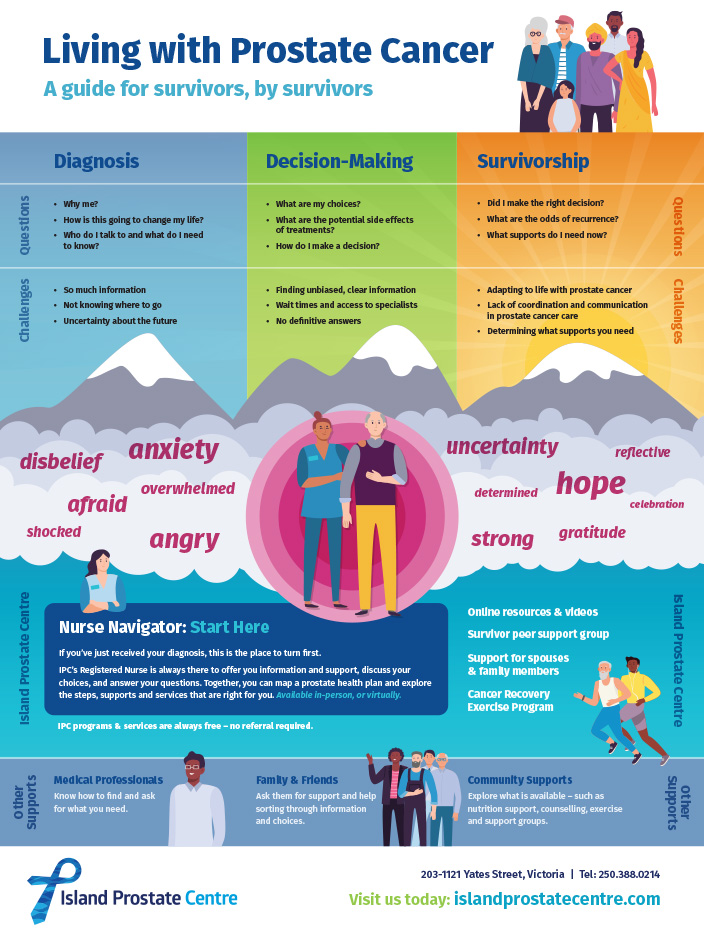

 How do you know if you have prostate cancer?
Often, many men do not know if they have prostate cancer. It is common in the early stages of this disease to not have any symptoms. A biopsy is a test that can definitively determine if someone has prostate cancer. During a biopsy your doctor takes samples of prostate tissue. A pathologist then examines this tissue under a microscope. If the tissue looks abnormal it may be prostate cancer.
The Sea Wolves Cancer Pack, based out of Nanaimo, is dedicated to supporting and advocating for men impacted by cancer on Vancouver Island and throughout BC. They look to connect with men, help them avoid isolation and provide support during their cancer journeys.

“I took a few books from the library. I underwent hormone therapy and read that this could result in bone density loss, so we began walking.”